ZRL tube guide
Use this quick reference guide to identify which tubes are appropriate for Zoetis Reference Laboratories (ZRL) sample collection based on sample type and common test usage. For detailed instructions on how to prepare and submit your sample, please refer to the collection guidelines specific to your sample type.
| Tube Type | Additive | Sample Type(s) | Tube Description | Common Uses |
|---|---|---|---|---|
|
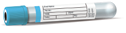
Blue-top tube
|
3.2% sodium citrate anticoagulant |
Plasma |
Light blue top
|
Coagulation testing (PT, aPTT, factor assays) |
|
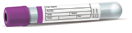
Purple-top or lavender-top tube
|
Potassium EDTA anticoagulant |
Whole blood/EDTA whole blood or plasma (EDTA plasma is rarely used) |
Purple or lavender top
|
Most common use:
|
|
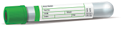
Green-top tube
|
Lithium heparin anticoagulant may be present as a floating disc in the tube |
Whole blood or plasma |
Green top
|
Most common use:
Other uses:
|
|
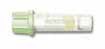
Mint- or light-green-top microtainer
|
Lithium heparin anticoagulant (either sprayed into tube or in gel) |
Plasma |
Mint- or light-green-top microtainer
|
Most common use:
|
|
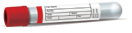
Red-top tube
|
Clot activator (sprayed inside of tube) |
Serum |
Red top with chalky residue (clot activator) in tube Please note: No-additive RTTs are also available. Tubes with clot activator should not be used when a no-additive tube is required. |
Most common use:
Other uses:
|
|
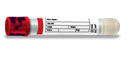
Serum-separator tube or tiger-top tube or gold-top tube
|
Clot activator (embedded in gel) |
Serum |
Red top, red and black marble top (tiger top)
|
Most common use:
Other uses:
|
|
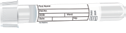
White-top tube
|
No additive |
Serum |
White top (no additive) |
Used when serum needs to be separated from RBCs and removed from original collection tube to avoid prolonged contact with RBCs or separator gel
|
|
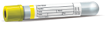
Yellow-top tube
|
No additive |
Urine |
Bright yellow top
|
Urine for urinalysis and other various tests |
 BTT
BTT
 LTT
LTT
 GRNTT
GRNTT
 M-GRNTT
 RTT
RTT
 SST
SST
 WTT
WTT
 Urine
Urine